Teléfono: +86-15814621876 Correo electrónico: contacto@xiaodingtech.cn

Complete Consumer Electronics Development Guide for Founders & Product Owners - XIAODING-TECNOLOGÍA

KNOWLEDGE BASE

Complete Consumer Electronics Development Guide for Founders & Product Owners

Many consumer electronics startup founders and brand owners suffer huge losses due to blind product development: repeated hardware revisions, wasted mold investment, delayed certification blocking overseas shipments, and unsold inventory tying up cash flow.
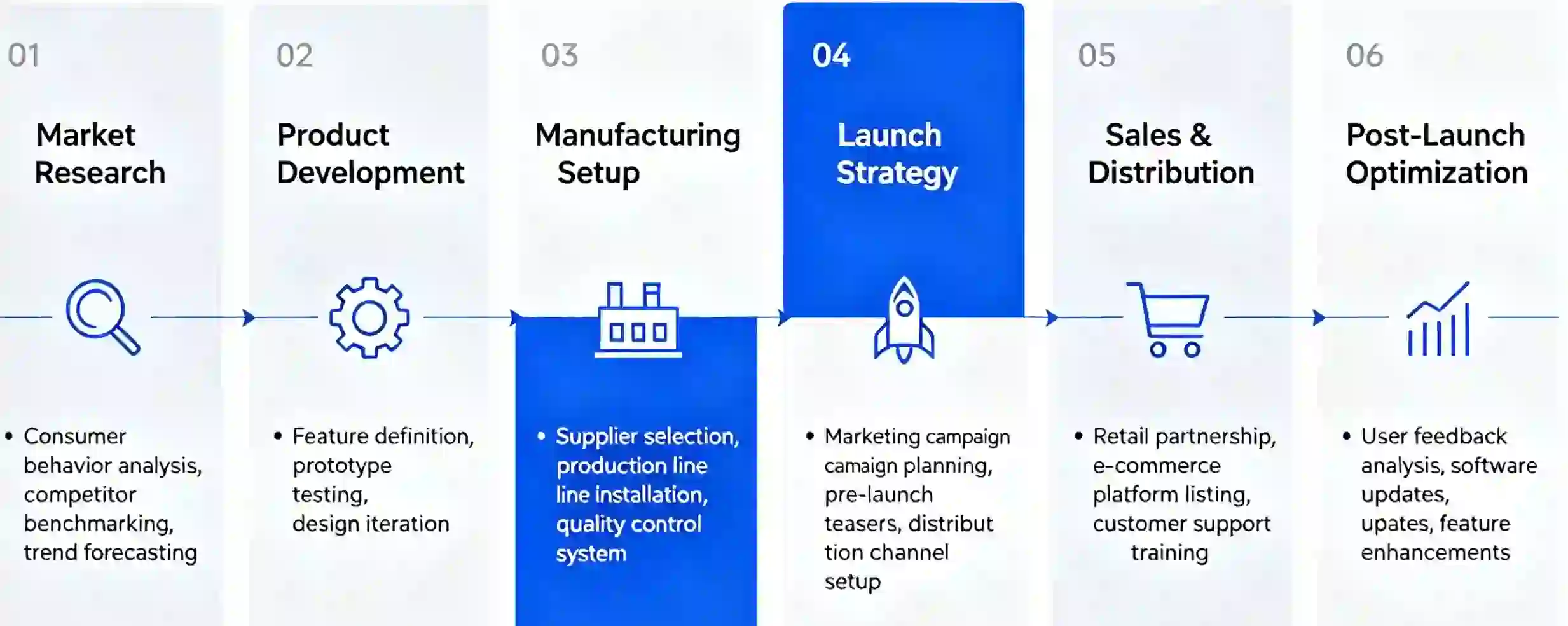
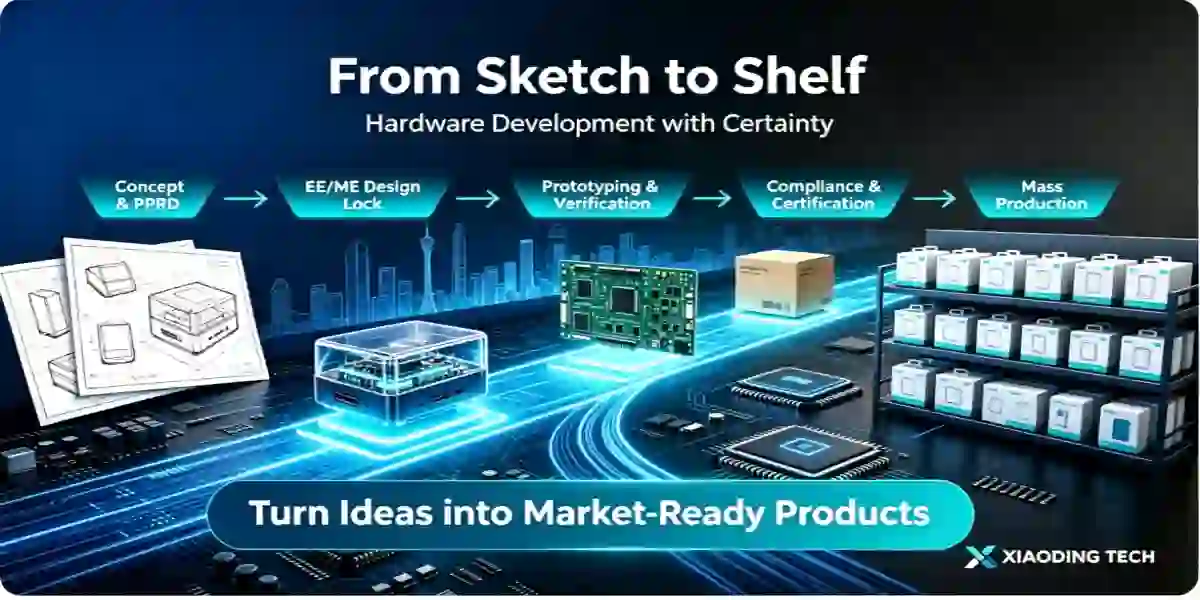
This guide is written from a business operator’s perspective, covering every critical work stage from initial product idea through R&D, tooling, mass production and global distribution. We focus strictly on budget control, schedule management, risk reduction and profit maximization, applicable to TWS earbuds, smart wearables, personal care gadgets, Bluetooth speakers, small home appliances and all portable 3C accessories.

Phase 1: Concept Evaluation & Project Approval (Core Decision Stage for Owners)

All work in this phase answers one core question: Is this product worth your investment? Avoid jumping into R&D without clear commercial logic.
  1. Market & Competitor Research

    Analyze mainstream competitors’ pricing, core selling points, customer negative feedback and channel profit systems. Distinguish market demands for domestic sales and cross-border exports. Research mainstream chip solutions, surface craftsmanship and supply chain cost trends to confirm your product’s unique competitive advantages.

  2. Profit Forecasting & Product Specification Definition

    Finalize core functions, appearance positioning, accessories and packaging standards. Calculate key financial indicators clearly: maximum BOM cost, mold expenses, certification fees, R&D labor cost, target retail price, gross profit margin and payback cycle. Cut redundant functions that raise costs without improving market competitiveness.

  3. Cross-Functional Feasibility Review

    Align R&D, supply chain and sales teams to evaluate solution maturity, mold development lead time, MOQ requirements for key materials, overseas certification cycles and channel acceptance risks. List potential risks including long-lead components, certification rectification and extra mold modification costs.

    Only launch the official project after review approval, locking the total budget and overall timeline.

Phase 2: Synchronized Product Design & R&D (Control Budget & Scope Creep)

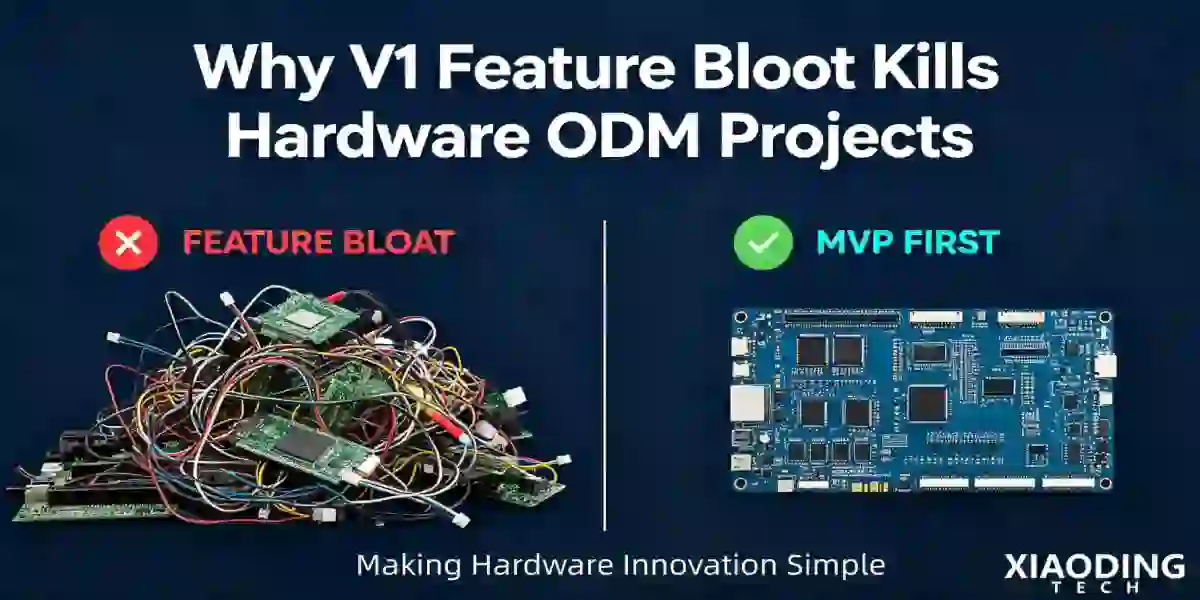
Scope creep and unlimited design revisions are the biggest cost killers. Business owners must lock design boundaries before development starts. Four core design modules progress in parallel:
  1. ID Industrial Appearance Design

    Confirm product styling, color matching and surface finishing. Limit prototype iterations to cut extra time and costs. Sign off on final renderings to forbid arbitrary appearance adjustments mid-project.

  2. MD Mechanical Structure Design

    Arrange internal layout for PCBA, battery and all components. Optimize housing, waterproof and assembly structures. Evaluate mold complexity in advance; simplify non-essential complex structures to lower mold prices and shorten lead times.

  3. Hardware Circuit Development

    Select cost-effective master chips, power management ICs and sensors to cap initial BOM cost. Restrict PCB revision rounds — every new version generates extra PCB, labor and testing expenses.

  4. firmware & Mobile APP Development

    Only develop market-mandatory interactive functions to reduce coding workload. Reserve OTA upgrade access to fix customer feedback via remote updates, avoiding costly hardware rework.

  5. First Functional Prototype Assembly

    Build the first complete prototype to verify size, hand feel and basic performance. Collect all structural and hardware defects for centralized revision instead of scattered small adjustments.

Phase 3: 3-Stage Prototype Verification & Rectification (Minimize Mass Production Failures)

We separate verification into EVT, DVT and PVT phases. Defects fixed at early prototype stages cost far less than troubleshooting during mass production.
  1. EVT Engineering Verification Prototype

    Test core hardware performance including power consumption, battery life, wireless Bluetooth/Wi-Fi signal and charging stability. Resolve native circuit flaws and finalize the second PCB version.

  2. DVT Design Verification Prototype

    Test full product reliability with near-mass-production housings: drop test, key service life, high-low temperature aging, waterproof test and EMC electromagnetic compatibility. Fix structural issues such as loose buckles and uneven assembly gaps, and revise mold drawings accordingly.

  3. PVT Production Verification Prototype

    Assemble small batches with fully mass-spec materials. Develop production test jigs and validate the complete assembly workflow. Freeze the final BOM, firmware version and mold drawings — no major design changes after this stage.

Phase 4: Mold Development, Global Certification & Supply Chain Preparation (Hard Prerequisites for Global Sales)

Delays in this phase will completely miss your peak sales window. All tasks must be arranged in advance.
  1. Mold Fabrication & Acceptance

    Start mold development once DVT design is locked. Track trial molding and revision progress strictly. Standardize housing color difference, dimension and assembly tolerance, and sign sample confirmation to prevent inconsistent mass-produced housings.

  2. Global Compliance Certifications (Mandatory for Market Access)

    Domestic markets require 3C, RoHS and battery safety certifications. Cross-border shipments demand FCC (US), CE-LVD/EMC (EU), PSE (Japan), KC (Korea), BQB Bluetooth certification, REACH and Prop 65. Reserve sufficient rectification lead time; products without valid certifications cannot be listed on e-commerce platforms or cleared customs.

  3. Full Supply Chain Establishment

    Source and compare multiple suppliers for chips, batteries, plastic housings and packaging materials. Sign material approval samples and negotiate MOQ, lead time and payment terms. Classify regular stocking materials and long-cycle scarce components to pre-lock inventory and avoid production shutdowns.

  4. Packaging & Accessory Finalization

    Design color boxes, user manuals and matching accessories, and complete packaging drop tests to prevent damage during long-distance international logistics. Unify packaging standards for consistent distribution across all channels.

Phase 5: Pilot Run & Producción en masa (Control Yield & Avoid Excess Inventory)

  1. Small-Batch Pilot Production

    Complete a full production workflow with limited units to calculate defect rates and optimize assembly procedures and testing standards. Only release large mass production orders after eliminating mass failure risks.

  2. Standardize Production Documents

    Issue standardized SOP assembly guides and finished product quality judgment criteria to regulate incoming inspection, in-line patrol and final factory inspection.

  3. Mass Scheduling & Quality Control

    Arrange production based on real sales forecasts to avoid overstock tying up working capital. Enforce strict IQC, IPQC and FQC inspection to cut after-sales return losses.

  4. Warehousing & Cross-Border Logistics Support

    Classify finished goods in warehouses. Prepare customs documents and shipping marks for export orders to guarantee efficient delivery.

Phase 6: Global Listing, Marketing & Product Iteration (Close the Profit Loop)

  1. Pre-Launch Preparation

    Unify product photos, marketing copy and specification materials. Build a complete price system including factory ex-factory price, distributor wholesale price and end-user retail price, with reserved margins for promotional campaigns. Compile all certification and test reports for platform and distributor review.

  2. Multi-Channel Global Distribution

    Domestic channels include short-video platforms, marketplaces, offline gift wholesalers and supermarkets. Cross-border layouts cover Temu, Shein, Amazonas, independent websites, overseas distributors and global trade shows. Adjust product bundles and pricing to fit each channel’s positioning.

  3. Brand Promotion & Customer Acquisition

    Drive exposure through industry communities, influencer reviews, trade show exhibitions and platform advertising to seize the new product sales window.

  4. Dynamic Inventory & Channel Management

    Monitor real-time sales data across all channels to adjust stocking volumes flexibly. Standardize channel pricing rules to avoid vicious price competition that erodes gross profit.

  5. After-Sales Review & Product Iteration

    Establish standardized return, exchange and repair workflows. Collect continuous feedback from end users and distributors; optimize existing products via OTA firmware updates. Summarize pain points to plan upgraded second-generation products and maintain long-term market competitiveness.

Quick Executive Summary for Founders

  1. Evaluate market profit & lock budget before development
  2. Run synchronized design and restrict scope revisions
  3. Complete 3 rounds of prototype testing to eliminate hidden defects
  4. Launch molds, global certifications and supply chain preparation in parallel
  5. Validate via pilot runs before large-batch manufacturing
  6. Distribute globally with data-driven inventory control & continuous product iteration

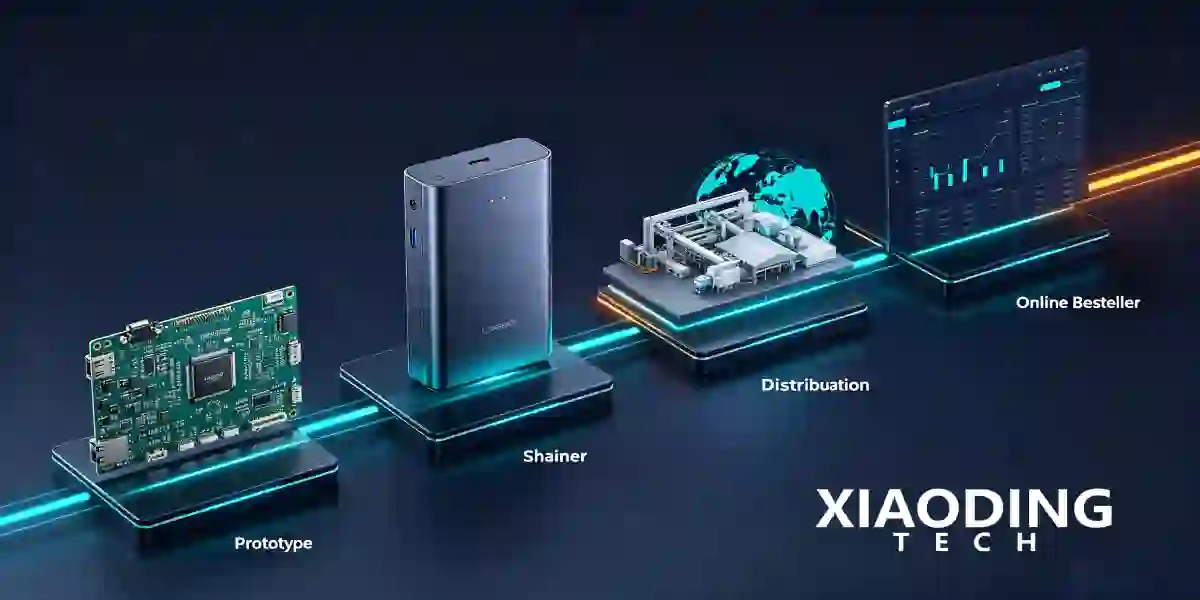
Have a New Product Idea? Let’s Bring It to Life Together Do you own exclusive original product concepts and need a reliable Chinese R&D and manufacturing partner to complete full concept-to-market launch?

Connect with XIAODING TECH. We turn your creative inspirations into highly competitive customized products and support the growth of your global business.

Contacto: XIAODING

WhatsApp: +86-15814621876

Correo electrónico: contacto@xiaodingtech.cn

#XIAODINGTECH#HardwareODM #ProductDevelopment #IdeaToProduct #CustomHardwareR&D #StartupProductLaunch #TurnkeyManufacturing #ElectronicDesign #NewProductIntroduction

Anterior:

Próximo:

Deja una respuesta

Dejar un mensaje