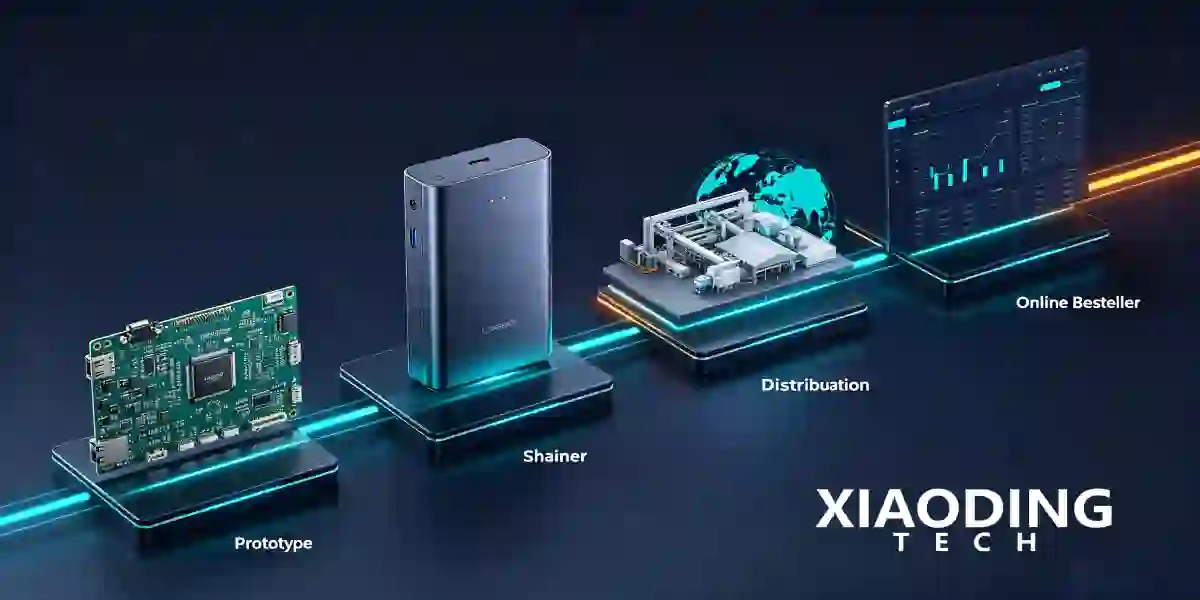
 СЯОДИН-ТЕХ

Target Audience: Overseas Entrepreneurs, Brand Founders, Hardware Designers, and Tech Startups.
Introduction: Many founders find the ODM (Производитель оригинального дизайна) process complex and expensive. This is often due to a lack of transparency in the hardware industry. This guide simplifies the process, explains where your budget goes, and helps you navigate the journey from a sketch to a market-ready product.
Our One-Stop Services:
Промышленный дизайн (ИДЕНТИФИКАТОР) & Mechanical Design (MD)
PCB Circuit Design & Firmware Development
Tooling & Mold Development
Prototype Debugging & Тестирование
Small-Batch Trial Production
Массовое производство & Global Logistics
1. Fundamentals: Understanding Hardware ODM
Q1: What is the difference between buying “Off-the-Shelf” and “ODM Development”?
Off-the-Shelf (Standard Products): Like buying a ready-made suit. It is fast, but you cannot change the design or functionality. You will face high competition with no brand differentiation.
ODM Development: Like a bespoke, tailored suit. We build the product from scratch based on your vision. You own the unique design, can apply for patents, and have full control over pricing and brand identity.
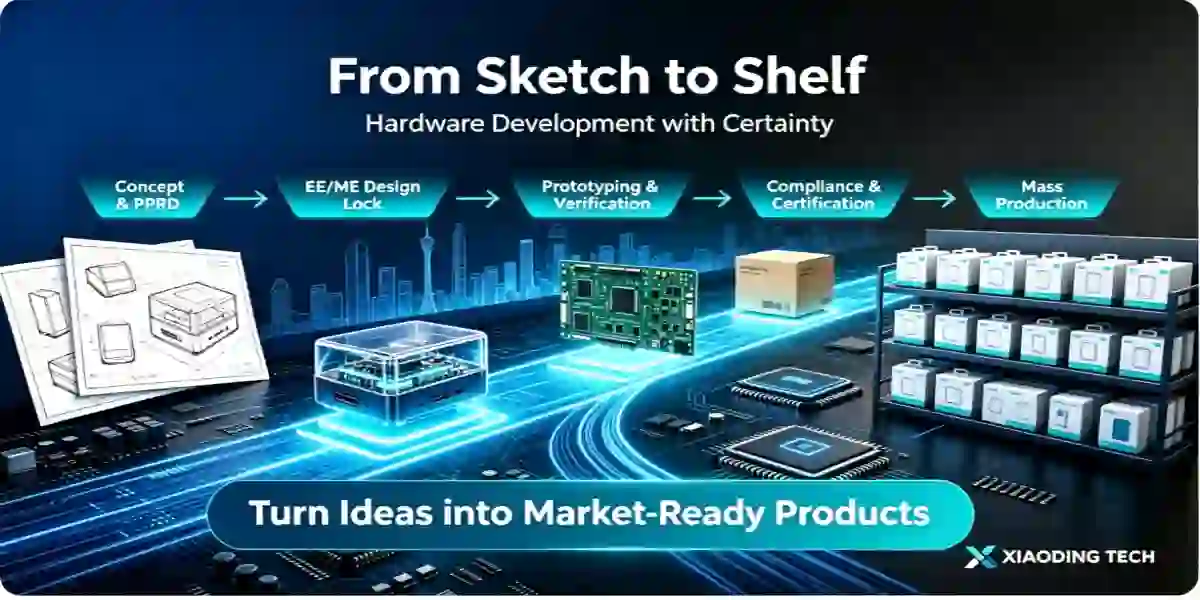
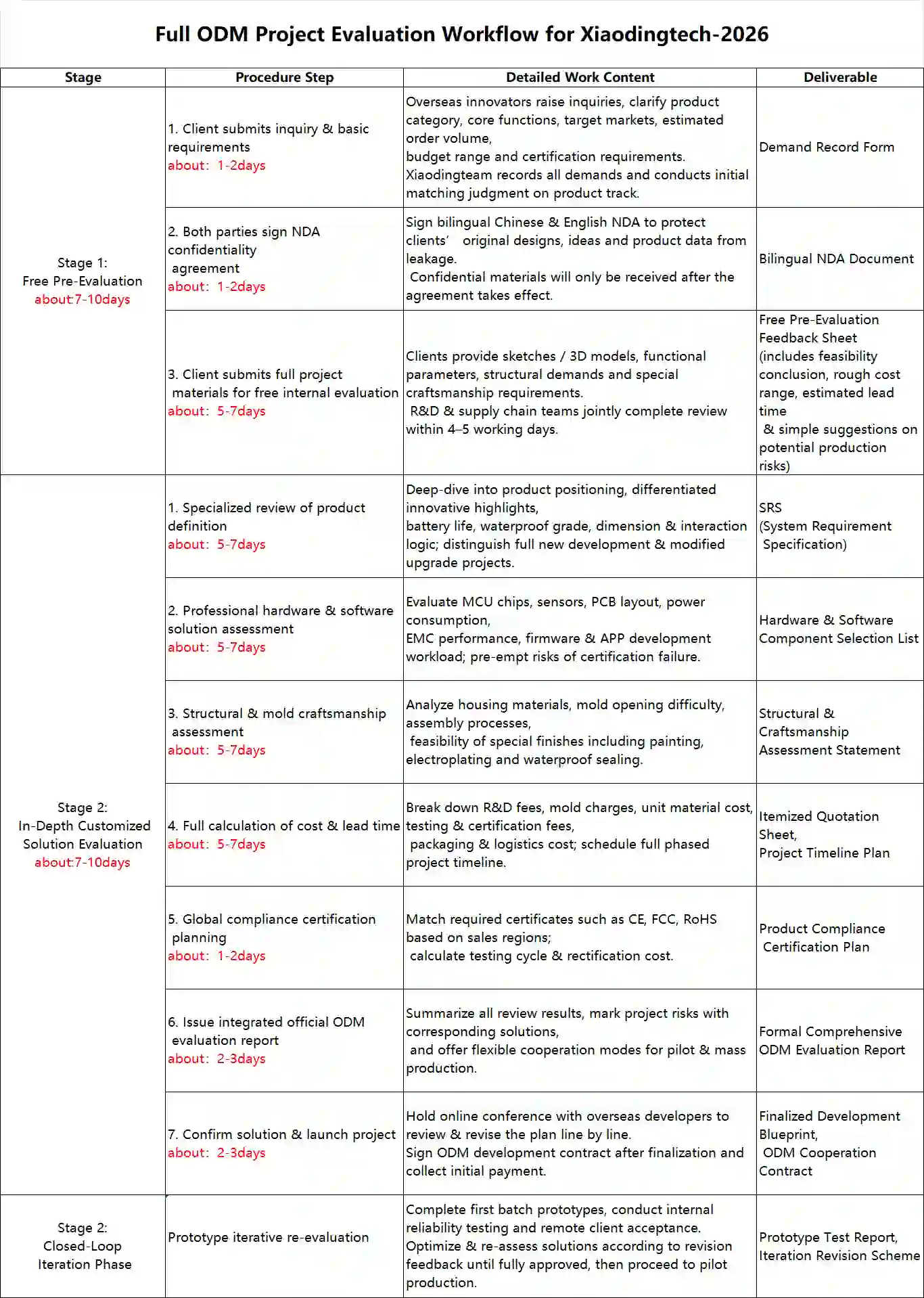
Q2: What are the 8 essential steps of hardware development?
Every successful product follows this rigorous path:
Requirement Assessment: Technical feasibility and cost forecasting.
Промышленный дизайн (ИДЕНТИФИКАТОР): Aesthetics, color, texture, and 3D renderings.
Mechanical Design (MD): Internal structure, assembly, waterproofing, and heat dissipation.
PCB Design: The “brain” and “nervous system” of your electronics.
Прототипирование: Creating functional samples to fix bugs and test ergonomics.
Tooling (Molding): Creating high-precision steel molds for mass production.
Trial Production: Testing yield rates and optimizing the assembly line.
Массовое производство: Scaled manufacturing and global delivery.
2. Cost Analysis: Where Does the Money Go?
Q3: Why is custom development more expensive than buying ready-made products?
Hardware pricing consists of two parts:
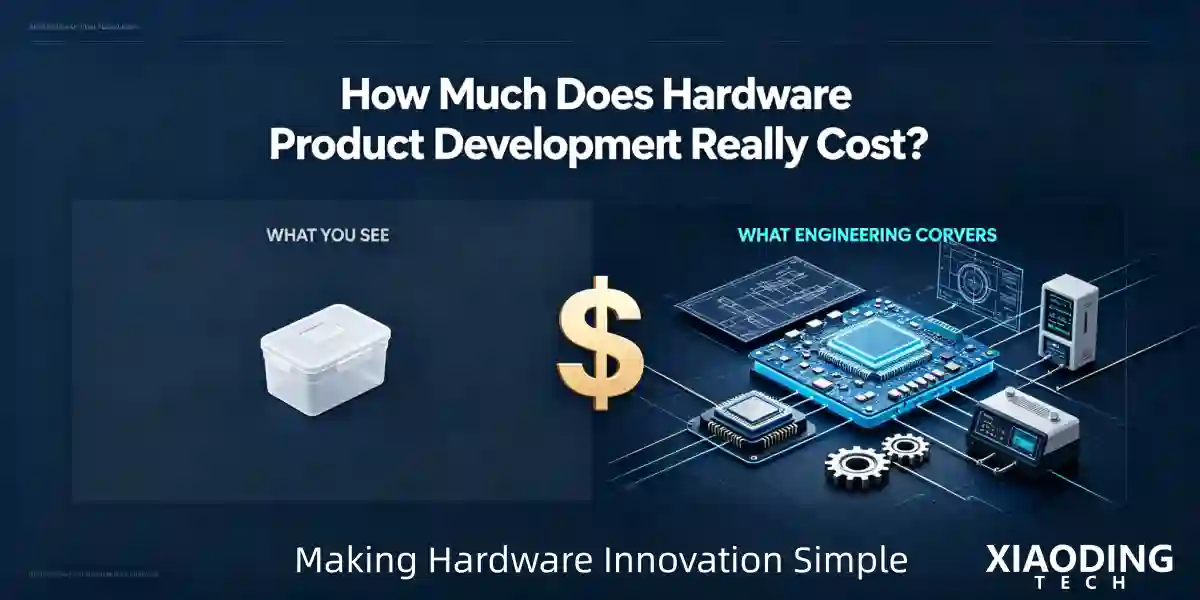
NRE (Non-Recurring Engineering) Fee: This is a one-time investment for engineering hours, design, and prototyping. You are paying for the exclusive IP of your product.
Unit Price: The cost of materials (BOM), assembly, and QC for each item.
Summary: You invest upfront in a custom solution and reap the benefits of low-cost, exclusive inventory in the long run.
Q4: Why is Tooling so expensive? Who owns the molds?
Molds are carved from high-grade steel with 0.01mm precision. They determine the feel and quality of your product. Important: Once paid, the molds belong to YOU. We maintain them for free, but they are exclusively used for your brand.
3. The “Small Details” That Make a Big Difference
Q5: How do you ensure my brand color (e.g., “Apple Green”) is accurate?
We don’t rely on photos. We use Pantone Color Codes or physical samples. We mix the pigments and compare them under standard light boxes to ensure 100% consistency across 10,000 единицы.
Q6: How is my Logo applied? Will it wear off?
We offer three main methods:
Silk/Pad Printing: Vibrant colors, cost-effective for most plastics.
Laser Engraving: Permanent, wear-resistant, great for metal or backlit logos.
In-Mold Texture: The logo is carved into the mold itself—no ink, permanent 3D effect.
Q7: Is my product safe? Will it overheat?
During the PCB design phase, we conduct thermal analysis. We use A-grade batteries with protection boards and design circuit-level safeguards (overcharge/overheat protection) to comply with international safety standards.
4. International Standards: IP & Согласие
Q8: Is my Intellectual Property (IP) safe in China?
Yes. We sign a strict NDA (Non-Disclosure Agreement) before any technical exchange. As an ODM partner, our business is service-based. We do not compete with our clients. The design, the code, and the molds are 100% your property.
Q9: Can the product pass CE/FCC/RoHS certifications?
Absolutely. We design the PCB and select components according to the standards of your target market (USA, EU, etc.). We provide technical support during the lab testing process until you receive your certificates.
5. Startup Strategy: Tips for Beginners
Q10: Can I skip “Trial Production” to save money and time?
NO. This is the most common mistake. A prototype is handmade; mass production is machine-made. A trial run (50-100 единицы) identifies assembly risks. Skipping this step could lead to 5,000 defective units.
Q11: What is the best strategy for a “Version 1” product?
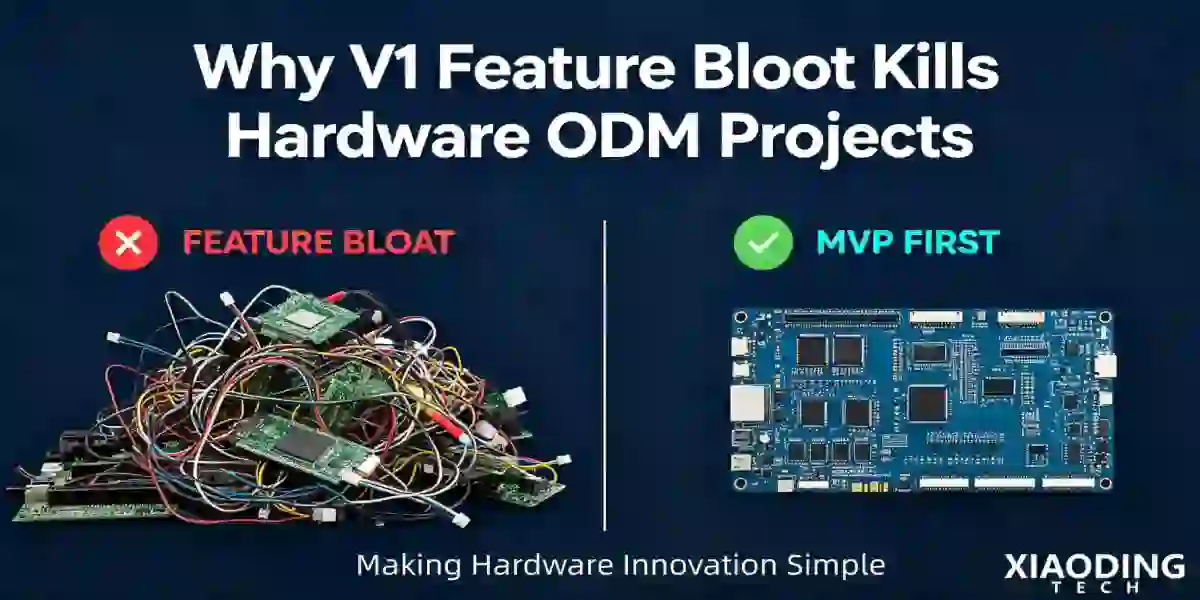
Do not try to make it “perfect” с 100 features. Focus on the Core Function (MVP). Launch fast, gather user feedback, and then iterate for Version 2. This saves budget and reduces market risk.
💼 Why Partner with Xiaoding Tech?
Hardware development is a marathon. You need a partner who understands both the physical limits of engineering and the speed of your business.
Transparency: No hidden fees. Weekly progress reports with photos and videos.
Reliability: Strict QC at every stage of production.
Efficiency: One-stop service from the first sketch to the shipping container.
Ready to bring your hardware vision to life?
[Contact Us for a Free Feasibility Study & Quote]